
.avif)



Multicultural Appreciation

The Importance of Equity and Multi-cultural Education
Whether teaching elementary school, middle school, or high school students, it is more crucial than ever for instructors to include culturally responsive instruction in the classroom in our increasingly varied and multicultural society. And the variety among students is growing not just in terms of color and ethnicity but also in terms of economic level, sexual orientation, gender identity, and linguistic background. All students benefit from promoting inclusion, raising awareness of multicultural education, and approaching instruction with cultural sensitivity. Increasing multicultural awareness and inclusion not only promotes acceptance and helps students thrive in a world with increasing diversity, but it also helps students with different backgrounds and needs succeed. These strategies will encourage all students’ cultural awareness, enhance each student’s sense of identity, and foster inclusion in the classroom community:

Get to Know Your Students
Maintain Consistent Communication
Acknowledge and Respect Every Student
Practice Cultural Sensitivity
Give Students Freedom and Flexibility
Equity Team (CRSE Team)
The CRSE team is comprised of educators to help create and foster student-centered learning environments that: affirm racial, linguistic, and cultural identities; prepare students for the rigor and independent learning, develop students’ abilities to connect across lines of difference; elevate historically marginalized voices; and empower students as agents of social change.
The team touches on the four tenets:

Welcoming and Affirming Environment
High Expectations and Rigorous Instruction
Inclusive Curriculum and Assessment
Ongoing Professional Learning and Support
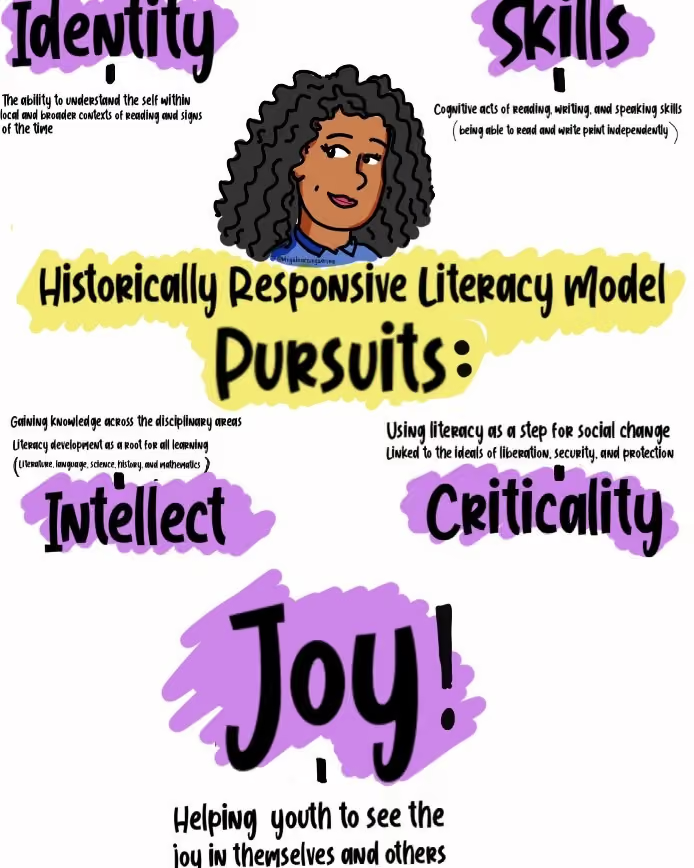
However, the team will focus on the tenet, Inclusive Curriculum and Assessment by incorporating aspects of Gholdy Muhammed’s Historically Responsive Literacy Model Pursuits (Mohammed, 2020) of Identity, Skills, Intellect, Criticality, and Joy to accomplish the following objective(s):
The opportunity to incorporate and design inclusive assessment that provides opportunities for students to express their learning in different modes and modalities.
The incorporation of designing scaffolds to bridge the gap between learning gaps and Next Generation grade level expectations
Redesigning systemic policies that have been present but not necessarily needed (ex. Homework)
The addition of student's voice in choices of learning through product, process, content, etc.
Ensure inclusion of a variety of voices (representatives bring multiple identities to the table for discussion)
Team Work - Through collaboration, data analysis, policy study, and system audit, this team hopes to:
Unpack CRSE framework
Revisit Cultivating Genius
Align to curriculum and standards
Identify moments in teaching and learning that provide a “lift” in the objectives
Vision includes:
To promote meaningful conversations within the school community
To support the school community by providing information on how to provide each individual child with the personalized resources necessary to reach their goal.
Objectives and goals for the team:
Create a unified definition of what equity in a school community means.
Have small group discussions on what equity is.
Ways to get to know your students’ individual stories.

P.S. 304
Early Childhood Lab School


2750 Lafayette Ave,
Bronx, NY 10465